
Guide
PP Laminated Woven Fabric
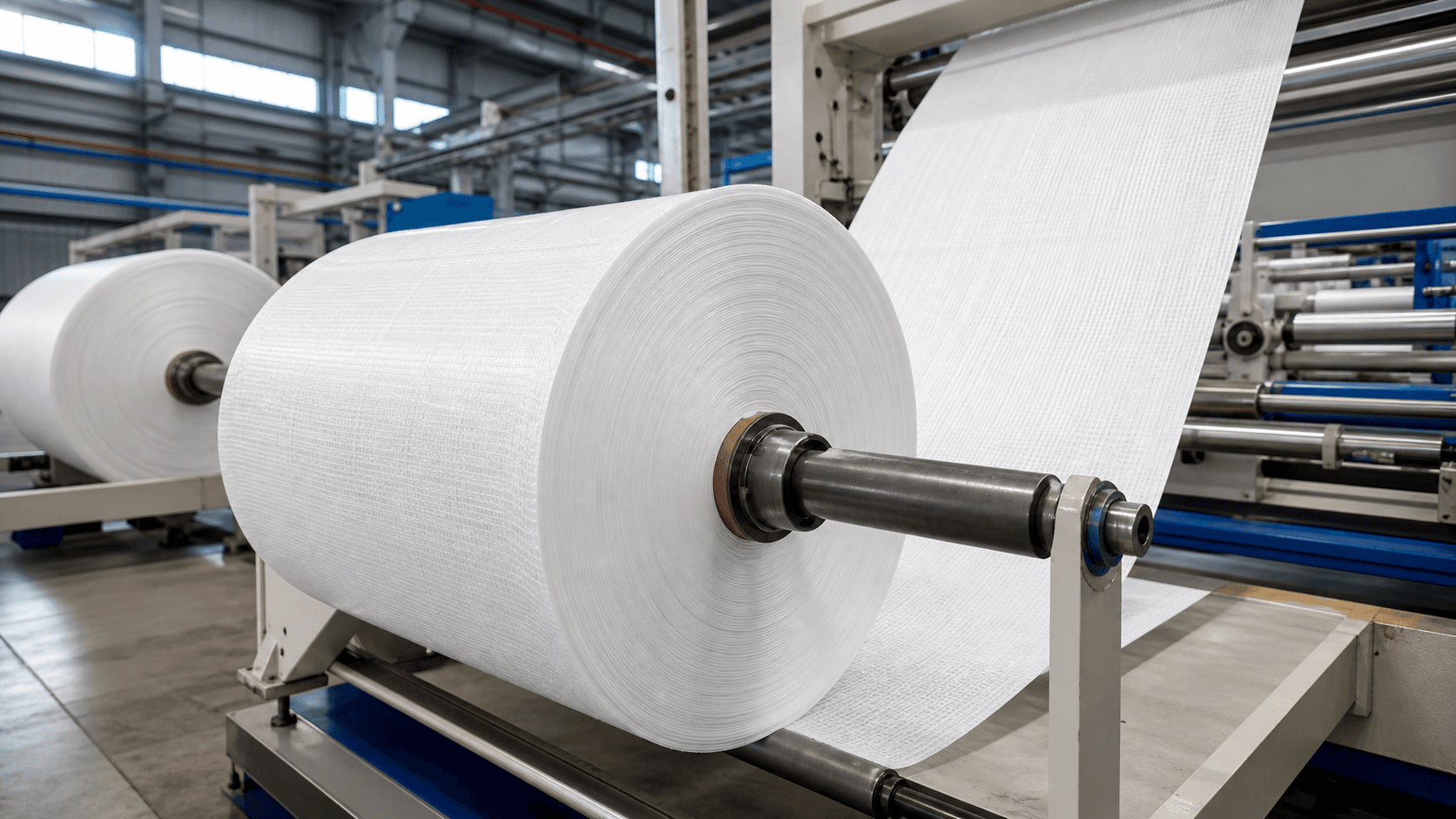
PP laminated woven fabric is a polypropylene woven base coated with a thin polymer film, supplied in rolls for conversion into bags, sacks, covers and industrial sheeting. The fabric retains the tensile strength of a woven structure while adding a smoother, less porous surface for print, moisture control and barrier performance.
Quick answer
PP laminated woven fabric is woven polypropylene coated with a thin PP, PE or BOPP film and supplied in tubular or flat rolls. Converters use it for bags, sacks and industrial covers. ABR Petro manufactures laminated woven fabric at its Gorakhpur facility alongside finished laminated bags.
What PP laminated woven fabric actually is
The base is woven from extruded polypropylene tapes on circular looms, then passed through a lamination line that bonds a thin layer of molten PP, PE or BOPP film onto one or both faces. The result is a roll-form material that behaves like a woven sack fabric but seals out fine dust and resists short-duration moisture contact better than un-laminated fabric.
- Woven base from PP tape yarn
- Single or double-side lamination
- Tubular or flat roll formats
- Treated for print adhesion when required
Typical specifications to discuss
Buyers usually specify GSM, woven mesh count, tape denier, roll width, laminate film thickness and whether corona treatment is needed for downstream printing. Sharing the end use up front helps lock the right combination of strength and barrier rather than over-spec'ing on either dimension.
- GSM: 60-200 depending on bag weight class
- Width: 30-120 cm tubular, wider in flat
- Mesh: 8x8 to 14x14 for common sack grades
- Laminate: 18-40 micron PP or PE film
BOPP vs PE lamination
BOPP lamination is a pre-printed bi-axially oriented film bonded to the woven base for premium graphics and shelf-facing presentation. PE or in-line PP lamination is applied as a molten film and is the common choice when the priority is barrier performance, dust seal and cost-efficient bulk packaging rather than high-resolution print.
Where the fabric goes after lamination
Converters use laminated woven fabric to make cement sacks, fertilizer bags, sugar packaging, food grain bags, FIBC inner panels, ground covers, tarpaulin replacements and short-life industrial covers. Selecting fabric over finished bags is common when a buyer runs their own bag-making, printing or stitching line.
- Bag and sack conversion
- FIBC and bulk container panels
- Industrial covers and sheeting
- Ground covers and tarpaulin substitutes
Procurement and supply notes
Buyers evaluating PP Laminated Woven Fabric usually need more than a product label. The practical decision depends on packed material, filling method, sack size, fabric strength, lamination requirement, print coverage, liner use, stitching quality and dispatch volume.
ABR Petro supports these discussions from its integrated Gorakhpur manufacturing base, where tape extrusion, weaving, lamination, printing, conversion, stitching and quality checks are coordinated for repeat industrial supply. This gives procurement teams a clearer path from specification to recurring production.
Frequently asked questions
What is PP laminated woven fabric?
PP laminated woven fabric is a polypropylene woven base coated with a thin polymer film, supplied in rolls for conversion into bags, sacks, covers and industrial sheeting. It keeps woven strength while adding a cleaner, less porous surface.
What is the difference between laminated and un-laminated PP woven fabric?
Un-laminated fabric is breathable woven PP, suitable for grains and products where airflow helps. Laminated fabric adds a film layer that reduces porosity, improves dust seal, supports cleaner printing and gives short-duration moisture protection.
Is PP laminated woven fabric the same as BOPP laminated fabric?
Not exactly. PP or PE lamination is applied as a molten film during extrusion coating. BOPP lamination is a pre-printed bi-axially oriented film bonded to the woven base, typically for premium printed bags. Both start with a similar woven structure.
What roll widths and GSM does ABR Petro supply?
ABR Petro supplies laminated woven fabric in tubular and flat formats across the common GSM range used for cement, sugar, fertilizer, food grain and conversion-led customers. Share width, mesh, GSM and laminate side preference with the order enquiry.
Can the fabric be printed after lamination?
Yes when the surface is treated for ink adhesion. For high-coverage or photographic print runs, BOPP pre-printed lamination usually gives a cleaner result than post-lamination surface printing.