
Guide
PP vs HDPE Woven Bags
PP and HDPE woven bags are selected for strength, handling performance, moisture needs, printing requirements and the type of product being packed.
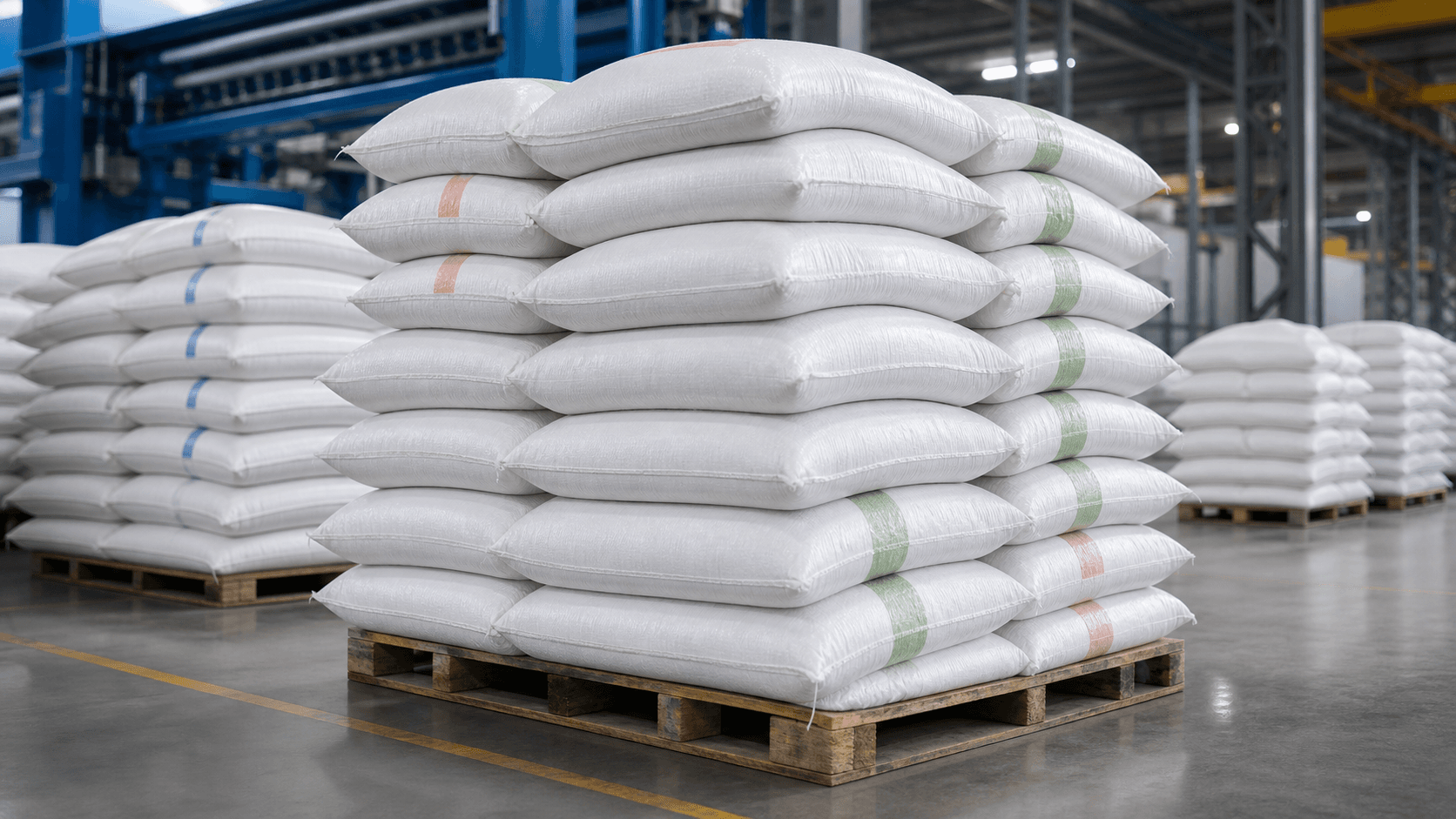
How buyers compare PP and HDPE sacks
The right choice depends on product weight, filling process, storage conditions, branding requirements and whether lamination or liner insertion is needed.
- Packed material
- Moisture exposure
- Printing needs
- Stacking and logistics
Where ABR Petro fits
ABR Petro manufactures both woven sacks and woven fabric, allowing buyers to source finished bags or conversion-ready fabric from the same industrial base.
Procurement and supply notes
Buyers evaluating PP vs HDPE Woven Bags usually need more than a product label. The practical decision depends on packed material, filling method, sack size, fabric strength, lamination requirement, print coverage, liner use, stitching quality and dispatch volume.
ABR Petro supports these discussions from its integrated Gorakhpur manufacturing base, where tape extrusion, weaving, lamination, printing, conversion, stitching and quality checks are coordinated for repeat industrial supply. This gives procurement teams a clearer path from specification to recurring production.
Frequently asked questions
What is PP vs HDPE woven bags used for?
It is used for bulk industrial packaging where strength, printability, moisture resistance and dependable handling performance matter.
Can ABR Petro supply PP vs HDPE woven bags for bulk orders?
Yes. ABR Petro manufactures woven sacks and fabric at a 10,000 MT annual capacity facility serving cement, sugar, fertilizer, food and agriculture buyers.
Are laminated and printed options available?
Yes. The facility supports laminated, un-laminated, printed, liner and valve-bag configurations depending on the product requirement.