
Guide
Laminated Woven Sacks Explained
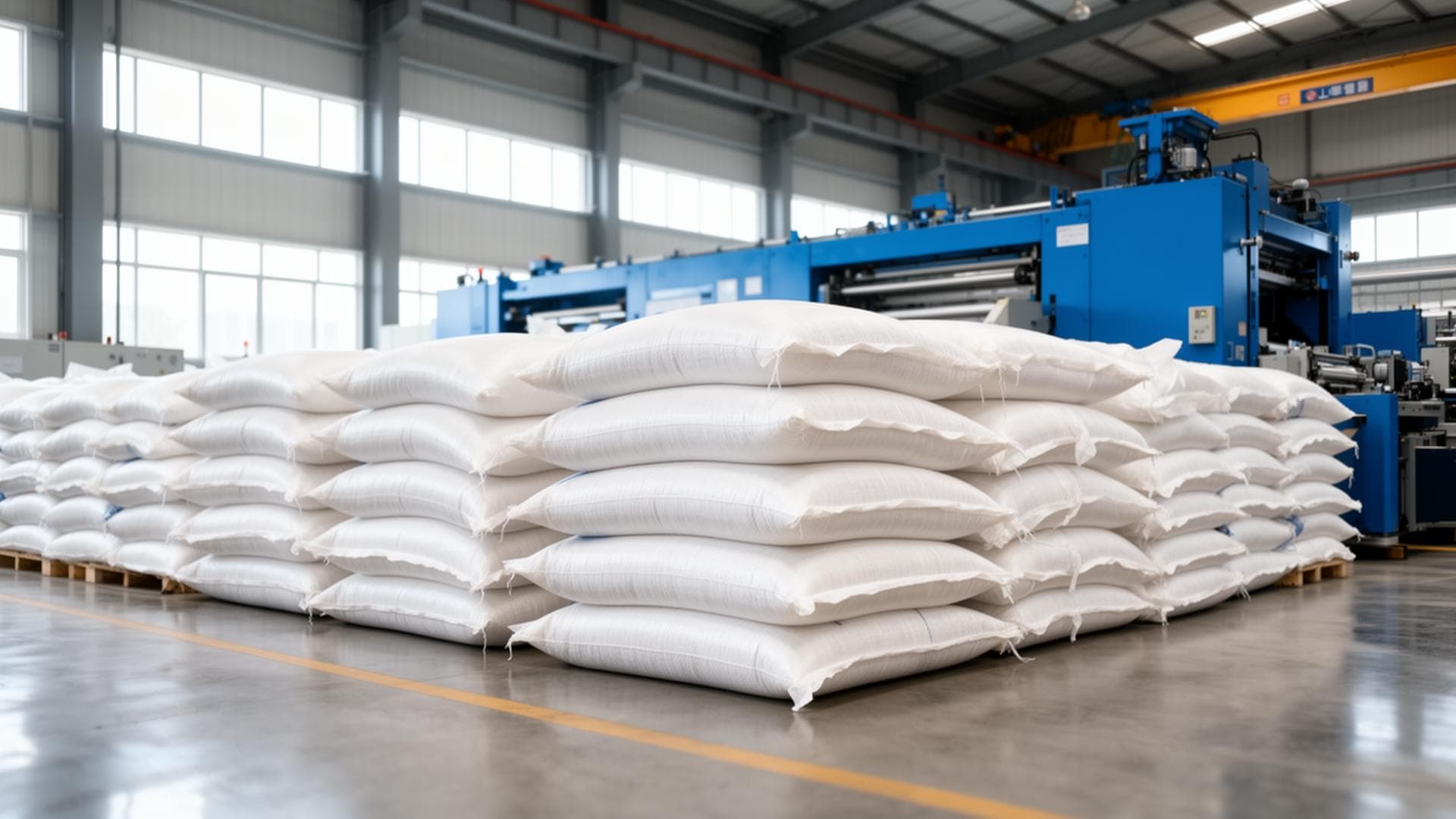
Laminated woven sacks are PP or HDPE woven bags with a thin polymer film bonded to the woven surface. The lamination reduces porosity, improves print clarity and helps the bag handle dust, moisture and stacking pressure better than an un-laminated equivalent.
Quick answer
Laminated woven sacks are woven polypropylene (or HDPE) bags with a thin film bonded to the surface for dust seal, cleaner print and short-duration moisture defence. ABR Petro manufactures laminated woven sacks at its Gorakhpur facility for cement, fertilizer, sugar and industrial buyers.
When lamination is worth the extra cost
Lamination is the right choice when the packed material is fine and dusty, when the bag must hold up in damp warehouses, when graphics matter for shelf or brand presentation, or when the same bag will be re-handled multiple times before consumption. For purely breathable products in short, well-controlled supply chains, an un-laminated woven sack is often enough.
- Fine, dust-prone materials (cement, powdered chemicals)
- Long storage in humid conditions
- Multi-handover supply chains
- Brand-facing printed packaging
How the lamination process works
After the woven fabric is produced on circular looms, it enters a lamination line where a molten film of PP or PE is extruded onto the woven surface and pressed by a chill roller. The film bonds without separate adhesive and the laminated roll is then cut, printed, converted and stitched into finished sacks.
Laminated vs un-laminated PP woven sacks
Both share the same woven base, so tensile and tear strength are comparable. The differences sit on the surface: laminated sacks have lower air permeability, cleaner print finish and better short-term moisture defence. Un-laminated sacks breathe, which matters for grains and seeds where airflow keeps the packed product stable.
- Lamination: dust seal, print clarity, moisture defence
- Un-laminated: breathability, lower cost, faster fill
- Both: same woven strength backbone
- Choice driven by packed product and supply chain
Where laminated woven sacks are commonly used
Cement, fertilizer, sugar, food grain, seed, animal feed and industrial chemical buyers all use laminated PP woven sacks. The exact format - laminated only, laminated and printed, BOPP laminated with full-bleed graphics, or laminated with an inner liner - is decided by the packed material and the brand presentation requirement.
Procurement and supply notes
Buyers evaluating Laminated Woven Sacks Explained usually need more than a product label. The practical decision depends on packed material, filling method, sack size, fabric strength, lamination requirement, print coverage, liner use, stitching quality and dispatch volume.
ABR Petro supports these discussions from its integrated Gorakhpur manufacturing base, where tape extrusion, weaving, lamination, printing, conversion, stitching and quality checks are coordinated for repeat industrial supply. This gives procurement teams a clearer path from specification to recurring production.
Frequently asked questions
Are laminated woven sacks waterproof?
Lamination resists short-duration moisture contact and dust ingress but a stitched laminated sack is not a fully sealed waterproof container. For high moisture risk, combine lamination with an inner polyethylene liner.
Can laminated woven bags be printed?
Yes. Most laminated sacks carry printed brand and compliance information. For high-resolution graphics, BOPP laminated bags with pre-printed film are the usual choice; for standard brand and lot information, online flexographic printing on laminated sacks is common.
Do laminated woven sacks cost significantly more than un-laminated?
Lamination adds material and a processing step, so the per-bag cost is higher than an un-laminated equivalent of the same GSM. Most buyers offset this against reduced product loss, cleaner handling and better brand presentation in their packaging budget.
Does ABR Petro manufacture laminated polypropylene bags in bulk?
Yes. ABR Petro runs integrated weaving and lamination at its GIDA, Gorakhpur facility with a 10,000 MT annual capacity, supplying laminated PP woven sacks across cement, sugar, fertilizer, food grain and industrial packaging programs.